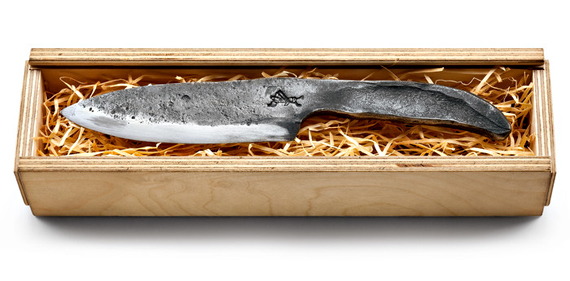
I think I'll pass, thank you.
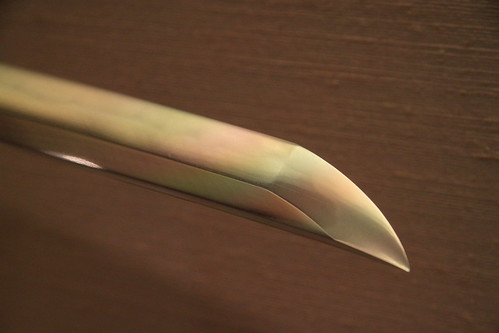 |
| Katana from the British Museum. Not crude, so it must be rubbish! |
|
| Katana from the British Museum. Not crude, so it must be rubbish! |
Rules for submitting comments:
1. No profanity. I maintain the pretense that this is a family-friendly site.
2. Stay on topic. A bit of straying and off-hand commenting is okay, but hijacking the discussion is right out.
3. No ad hominem attacks. Attack the subject, not the other person on the thread and keep the discussion civil.
4. No spamming or commercial endorsements. These get deleted immediately.
Tip: Beware of putting hyperlinks in your comments–especially at the end. For some reason, Blogger interprets these as spam.
Note: Due to the recent spate of anonymous spamming, registration for comments is now required.
Heck, I have made myself edged utensils and weapons. If you really love the iron and steel, you will finish the product really fine and nice and mount it with a handle equally made by a craftsman. I could do better than that.
ReplyDeleteThat katana has a nice ó-kissaki and steep yokote, and the hamon is clearly distinguishable. That swords just yells "Wield me! Do some suburi with me!"
When I bought my own longsword, it was not that I had chosen the sword. The sword chose me.
There is a lack of texture in the modern world, and I think that the appeal of this bit of unrefined thinginess comes from this. While high craftsmanship, as needed to forge a good sword (or throw a properly rustic-looking tea bowl), remains rare, a factory can make you a knife blade, in a suitably hard and tough alloy, and it will cut, and hold an edge---and feel like every other piece of steel.
ReplyDeleteThis knife does look like something I could make from a lump of steel, a forge blown with a hair dryer and a couple of rocks. But my favorite knife for playing in the woods has a damascus blade, etched to emphasize the folding. And an axe that I'm hoping will work out, was forged from an old rasp. Raspiness knocked down just enough to leave the texture but not catch on things, a filler forge-welded in to make the head wedge-shaped, and neat, regular file-work for decoration. But the steel's origins are not hidden. (How it will work on kindling is a question for this summer, I hope.)
When glazed porcelain coffee cups are $1.50 at Wal-Mart, a rough-glazed stoneware Beaker Folk-shaped beaker becomes interesting.
Everyone to their own tastes.
ReplyDeleteI've seen smiths make belt knives from broken files, and the finish is so mirror-smooth you'd need a very powerful microscope to see any evidence that the blade was ever anything else to begin with. With hilts made from anything from compressed leather washers to deer antler.
The integral hilt on this one is so rough I'd be afraid to use it unless I was wearing heavy work gloves.
cheers
eon